Articulation Therapy in East Delhi
Inclusive Neuro Development Center, शाहदरा एक आधुनिक आवाज़ व उच्चारण सुधार (Articulation Therapy) थेरेपी केंद्र है, जो विशेष आवश्यकता वाले बच्चों और वयस्कों दोनों के लिए उच्च गुणवत्ता की सेवाएं प्रदान करता है। केंद्र का विशेष फोकस है — Articulation Therapy यानि कि बच्चों के गलत उच्चारण और बोलने की स्पष्टता से जुड़ी समस्याओं का समाधान।
हमारी आर्टिकुलेशन थेरेपी बच्चों को सही उच्चारण, स्पष्ट बोलने और आत्मविश्वास के साथ संवाद करने में मदद करती है—भाषा विकास का सशक्त माध्यम।
What is Articulation Therapy?
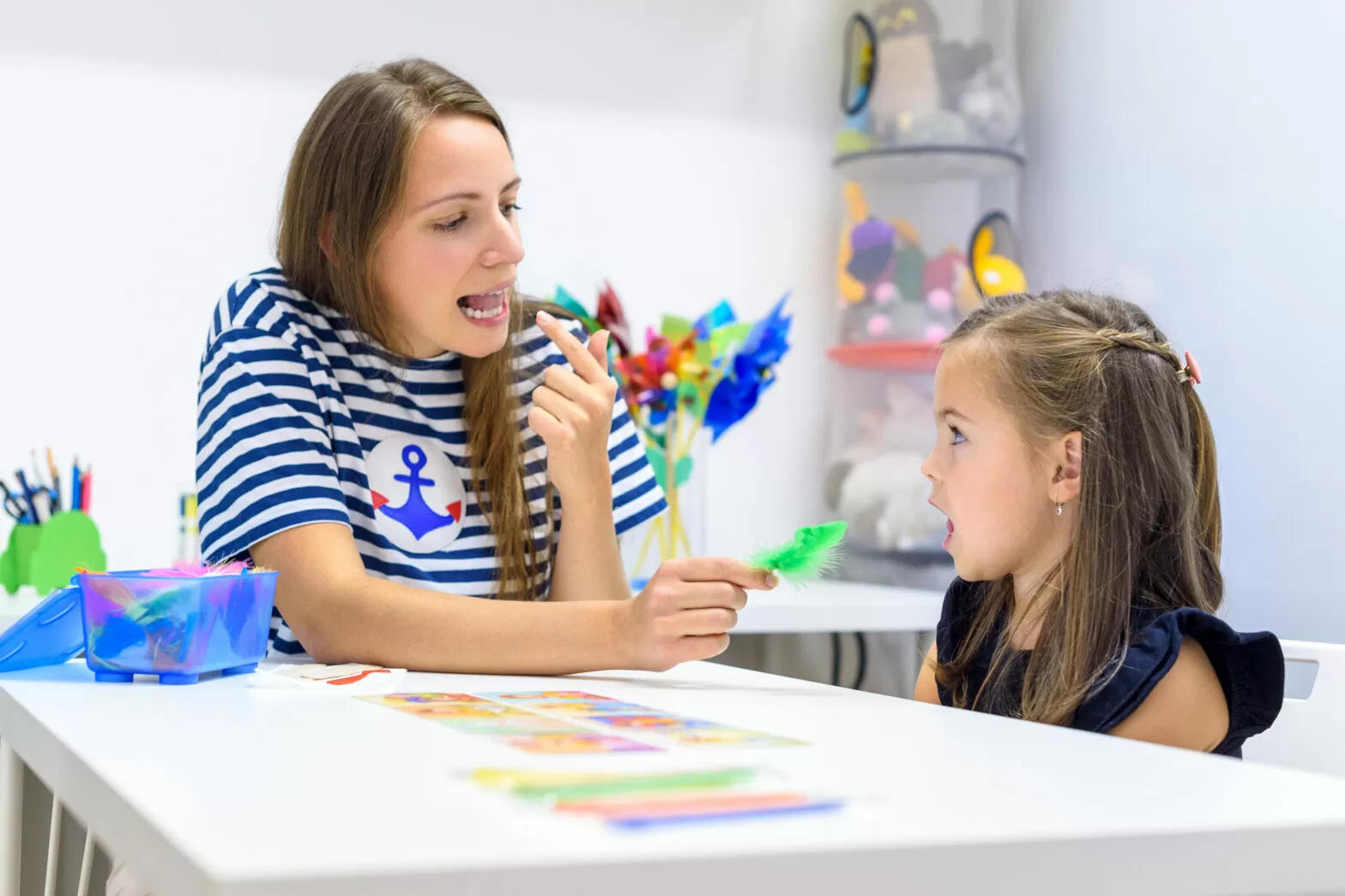
Articulation therapy improves speech clarity by teaching correct production of sounds. It helps children and adults who substitute, omit, distort, or add sounds while speaking.
SODA — Common Types of Articulation Errors
Example: In substitution, /k/ → /t/ (e.g., "Kamal" → "Tamal"). In omission, a final sound may be dropped (e.g., "Ram" → "Ra").
Articulation Errors Based on Word Position
1. Initial Position (Beginning of the word)
The first sound of the word is produced incorrectly — the child struggles to start the word with correct placement.
| Target | Incorrect | Error Type |
|---|---|---|
| Kamal | Tamal | Substitution (/k/ → /t/) |
| Sapna | Tapna | Substitution (/s/ → /t/) |
| Ram | Lam | Substitution (/r/ → /l/) |
2. Medial Position (Middle of the word)
The middle sound is misarticulated or omitted, making the word unclear.
| Target | Incorrect | Notes |
|---|---|---|
| Pakka | Patta | /k/ → /t/ |
| Akela | Atela | /k/ omitted/distorted |
| Chacha | Tacha | /ch/ → /t/ |
| Kitaab | Kitam | /b/ → /m/ |
3. Final Position (End of the word)
The last sound is dropped or spoken incorrectly — often the child stops before completing the sound.
| Target | Incorrect | Type |
|---|---|---|
| Ram | Ra | Omission (final /m/) |
| Ghar | Ghal | Substitution (/r/ → /l/) |
| Pustak | Pusta | Omission (final /k/) |
| Paas | Paa | Omission (final /s/) |
Causes of Articulation Problems
- ⦾ Weakness in tongue, lips, or jaw muscles
- ⦾ Habitual mispronunciation
- ⦾ Hearing impairment
- ⦾ Autism, developmental delays, or neurological conditions
- ⦾ Language background or dialect influence
Techniques Used in Articulation Therapy
1. Oral-Motor Exercises
Strengthen tongue, lips, and jaw — e.g., moving tongue left–right, blowing through pursed lips, drinking through a straw.
2. Mirror & Phonetic Placement
Practice tongue/lip placement with a mirror and visual cues to produce target sounds accurately.
3. Repetition & Drill Practice
Progression: sound → syllable → word → sentence → conversation.
4. Minimal Pair Technique
Use pairs that differ by one sound (e.g., car–tar, ram–lam) to highlight contrasts.
5. Multisensory Approach
Combine auditory, visual, and tactile cues (flashcards, toys, pictures) for better learning.
6. Parent Coaching
Train parents for 10–15 minutes of daily home practice to reinforce therapy gains.
Why Dr. Murli Singh and His Expert Team?
Dr. Murli Singh is a Senior Speech Therapist with 27 years of experience. His team has helped thousands of children and adults with speech clarity issues, stammering, puberphonia, autism-related speech problems, and articulation disorders.
- ⦿ 27 years of expertise handling complex cases
- ⦿ Specialized articulation therapy with proven success
- ⦿ Personalized plans based on detailed assessment
- ⦿ Scientific techniques: oral-motor, phonetic placement, multisensory methods
- ⦿ Structured parent involvement programs
- ⦿ Thousands of success stories — clear, confident speech outcomes
Conclusion
Articulation therapy systematically addresses errors in initial, medial, and final word positions using a range of exercises and evidence-based techniques. With an experienced team and consistent home practice, individuals can overcome unclear speech and build confident communication skills.